The market winced. Business spend held firm.

The Coupa Business Spend Index™ Quarterly Update

Coupa

Powered by AddSearch

fifty fifty landing hero Mobile Image

Turn Strategy into Action

Elevate your procurement team with Coupa Category Strategy, the proven AI-native solution that helps you lead with confidence and capture more value from every category.

category-management-hero-zone-2148975941
Category Strategy Dashboard

Build long-term category health with Coupa Navi™

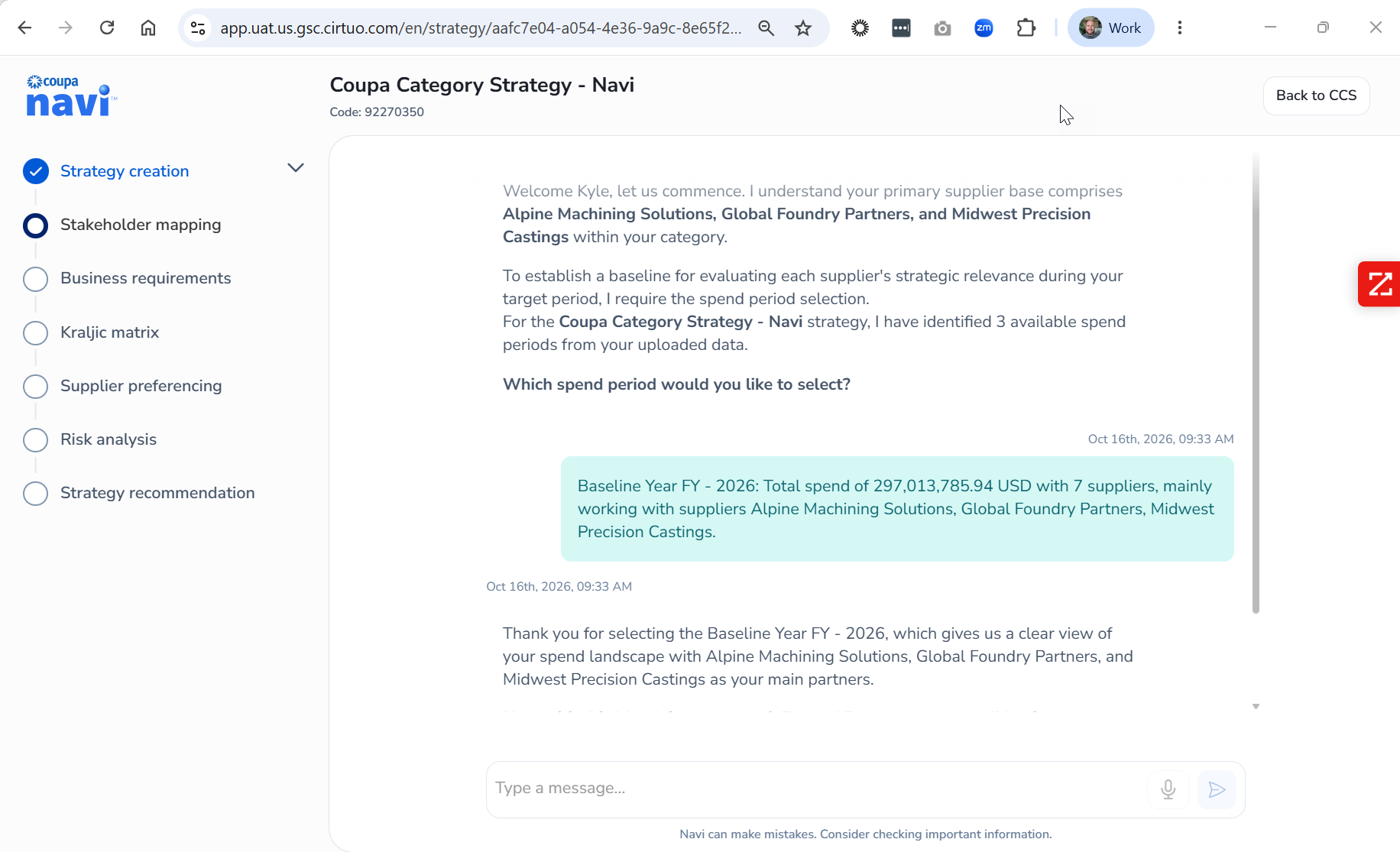
Coupa Category Strategy is built to strengthen every category for the long run, not just fix it once. Coupa Navi™ acts as your AI-native strategy consultant, surfacing the right levers and recommendations to reduce risk, create opportunity, and capture sustainable value — tailored to your specific category and business.
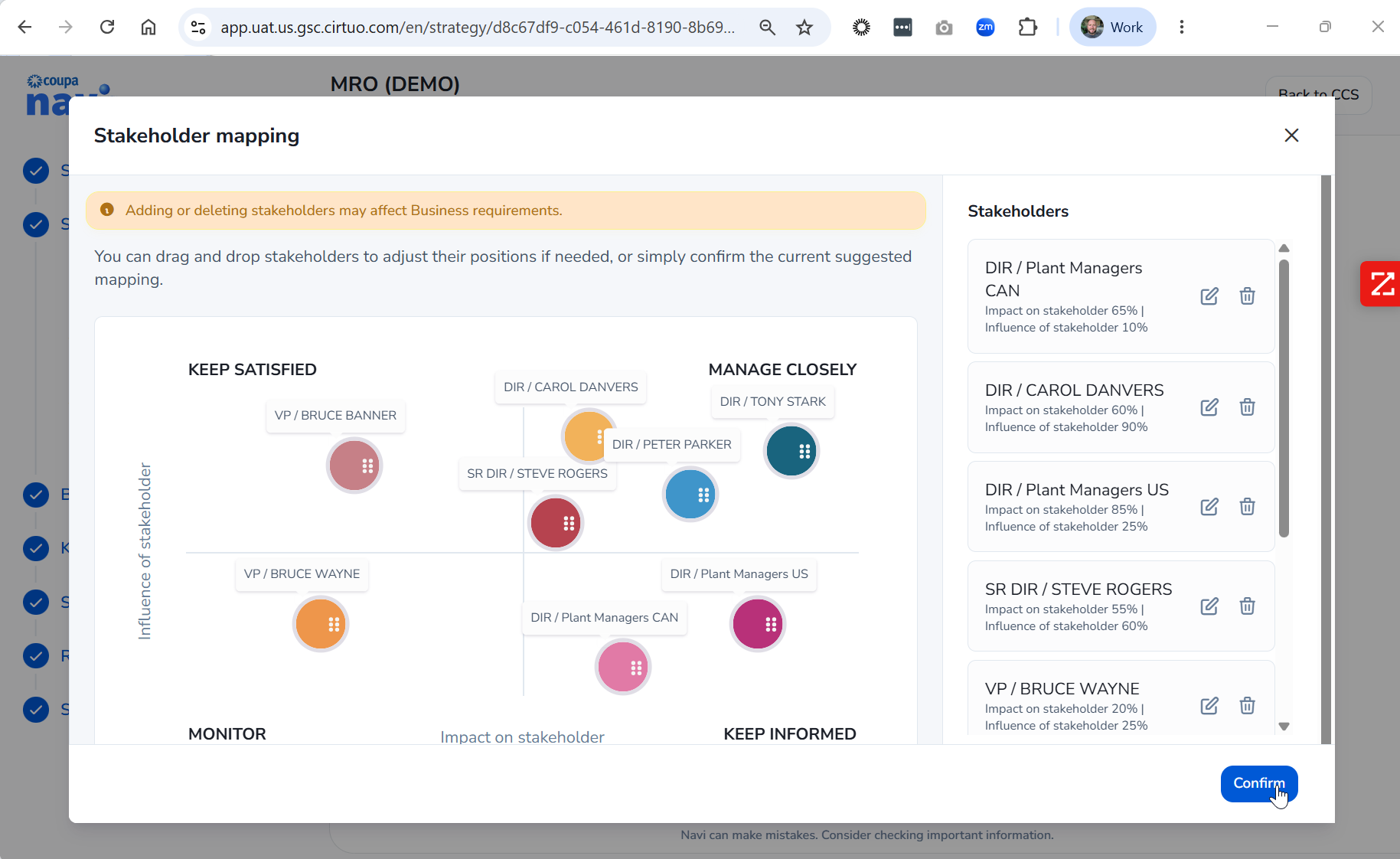
Category Strategy Dashboard

Turn stakeholder influence into strategic alignment

Stakeholders hold real influence over whether a strategy gets traction — treating them as a box to check is where most strategies stall. Coupa Category Strategy replaces the stress of chasing sign-offs with structured, AI-guided interviews that turn stakeholder input into genuine alignment, prioritizing factors like innovation, speed-to-market, supply assurance, and cost.
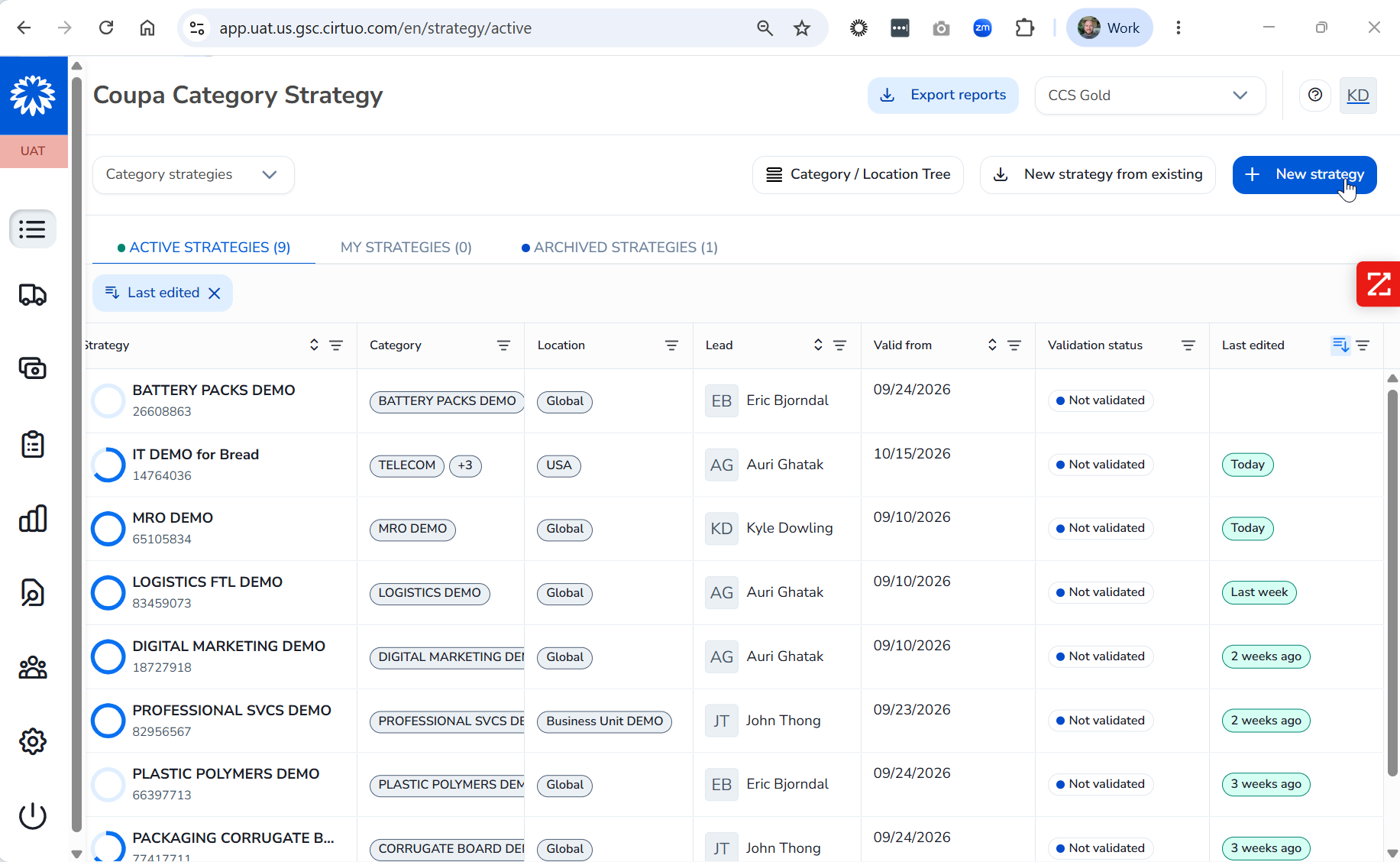
Category Strategy Dashboard

Connect strategy to every spend decision

Start with a precise category taxonomy built on your Coupa data, then push initiatives directly into Coupa Sourcing and across your entire spend ecosystem. Whether managing supplier risk and onboarding, contracts, intake, or supply chain execution, actions in one module automatically flow back to sharpen your strategy. Your plans continuously adapt to real-world performance instead of sitting still after approval.
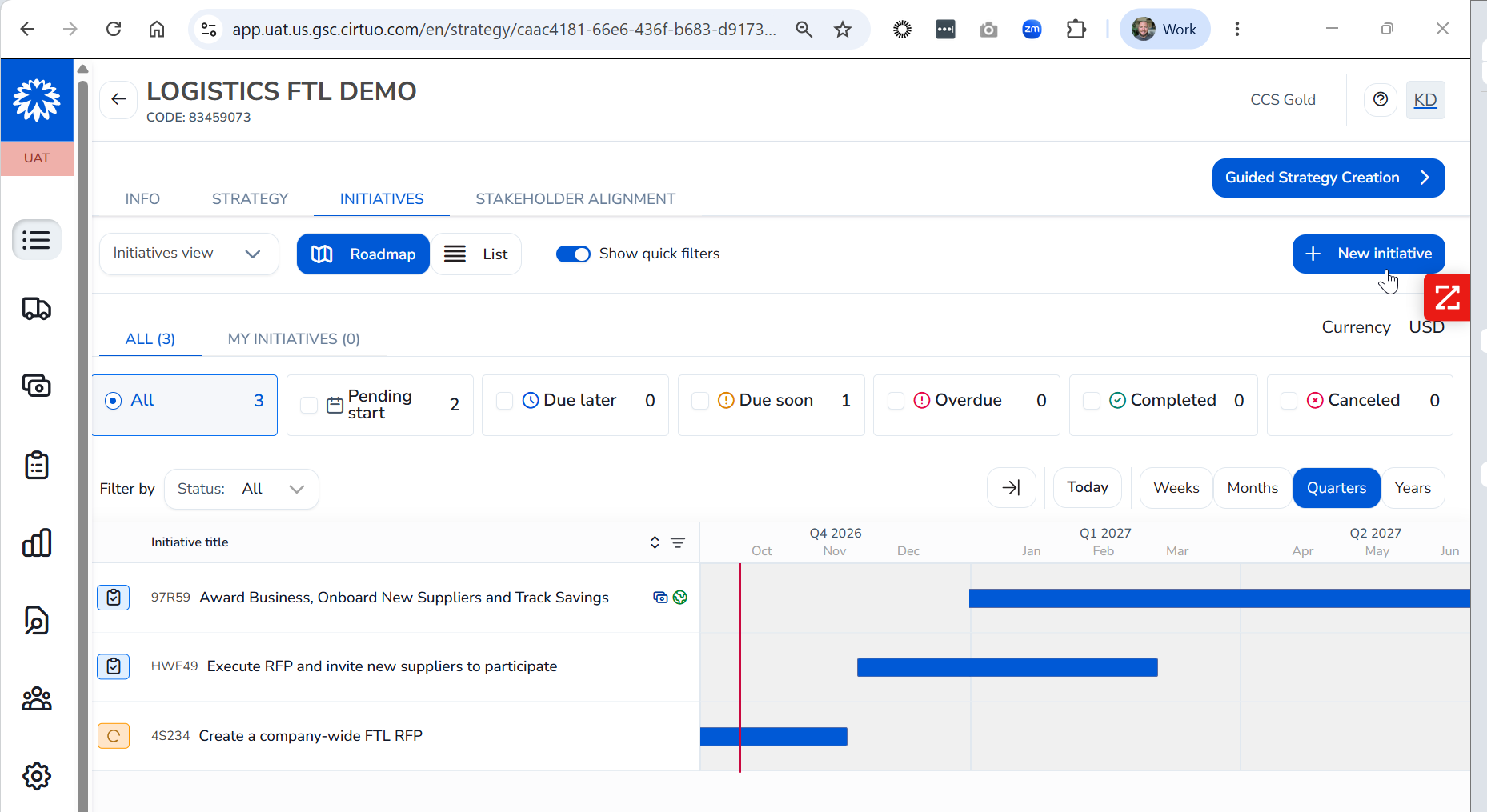
Category Strategy Dashboard

See the full value of every initiative

For every dollar saved, there’s often just as much value created elsewhere — stronger supplier relationships, a more resilient supply chain, sharper competitive tension in your supply market, and more. Track that value alongside traditional cost savings to reflect your strategy’s full impact on the business, and build a foundation for long-term value capture.
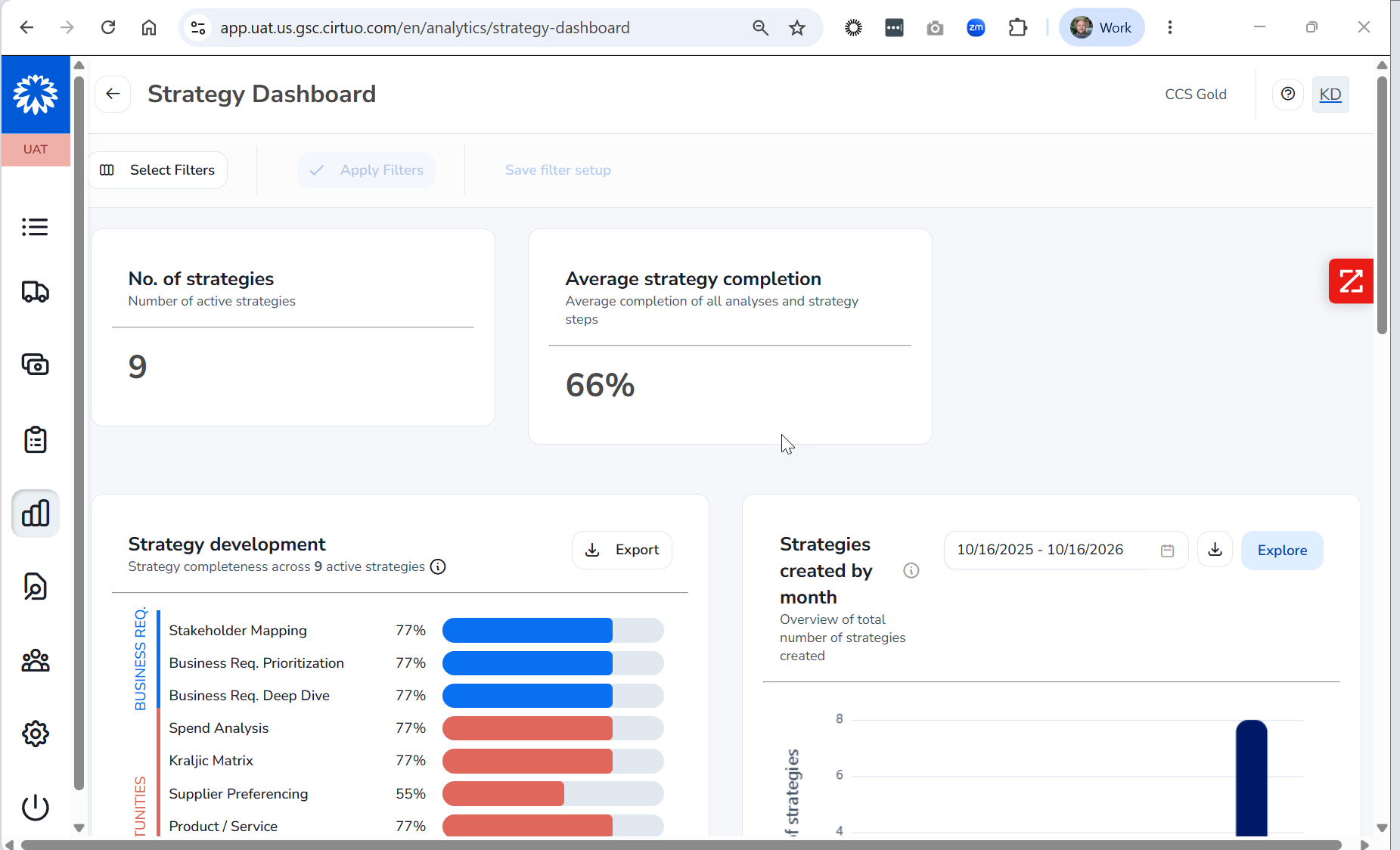
Category Strategy Dashboard

Lead with more purpose

Every category strategy in Coupa follows the same proven methodology, so as they add up, leaders get one aggregated view across the whole portfolio. This visibility isn't just for the people building each strategy — it’s what lets leaders direct training, initiatives, and resources to the areas that matter most, leading with intention instead of reacting category by category.

sourcing-and-contract-management-and-procurement-1626852668

The natural next step: Category Strategy + supplier information & risk management

A clear category strategy is the natural foundation for stronger supplier relationships. Together, Coupa Category Strategy and Coupa Supplier Information & Risk Management help you move from transactional buying to strategic partnership — segmenting suppliers, tracking performance, and managing risk in one connected view.

Real intelligence uses domain-specific data

AI trained on real business spend data comes to conclusions you can trust, with context, accuracy, and built-in policy compliance.

Explore More


Category Strategy FAQs

What is the difference between category strategy and strategic sourcing?

Strategic sourcing is a project-based process. It focuses on running an event, evaluating suppliers, and negotiating terms for a specific business need. Category strategy is the ongoing market intelligence that guides this process. It maps a spend category's market, risks, and business role to determine when and how sourcing should happen.

  • Strategic sourcing answers how you buy.
  • Category strategy answers what your category approach should be and why.

Most category plans end up as static slide decks stored in a shared drive. With Coupa, your category plans connect directly to your sourcing engine as active, real-time parameters. This integration turns your planning into immediate, guided execution.


Why can’t general-purpose AI build an executable category strategy?

While general-purpose AI can generate a text draft in seconds, a fast draft can stall actual execution. It creates a false sense of completion while skipping the critical steps required for real-world business results.

  • No repeatable methodology: General AI lacks a fixed framework. You will get a different structure and layout every time you run a prompt. Enterprise strategy requires a consistent approach across all categories.
  • No stakeholder alignment: Chatbots cannot interview stakeholders, model risk, or align team priorities.
  • No downstream execution: Standalone text cannot execute your plans. Value only accumulates when strategic decisions feed directly into live buying engines.

Coupa embeds AI directly into a guided, step-by-step workflow. It combines structured consulting frameworks with a list of 90 value levers to ensure insights translate directly into your sourcing system.

How do Navi™ AI Agents speed up category planning?

Manual data collection and slide formatting often delay category planning. Coupa embeds domain-specific AI agents directly into your workflow to handle these administrative tasks.

  • The Consultant Agent: Guides you step-by-step through market benchmarks and strategic value-lever selection.
  • The Storytelling Agent: Builds clear category narratives and executive presentations directly from your spend analytics to cut creation time by up to 70%.
  • The Supplier Discovery Agent: Searches Coupa's community intelligence to identify qualified, resilient suppliers.

These agents handle the manual research so you can focus entirely on making strategic decisions.

How does Coupa turn consulting frameworks into sourcing decisions?

Coupa converts textbook procurement frameworks into automated sourcing rules before your supplier negotiations begin.

  • Kraljic Matrix: Automatically determines your negotiation posture. Leverage categories trigger competitive bidding. Strategic categories drive collaborative value engineering. Bottleneck categories enforce dual-sourcing caps to manage risk. Routine categories trigger automated catalog buying.
  • Porter's Five Forces: Evaluates supply market concentration and buyer power to determine the best timing for your next sourcing event.
  • Supplier Preferencing: Analyzes how suppliers view your business so your negotiation tactics match how much they value your account.
Why do category strategies go stale, and how does Coupa fix it?

Traditional strategies are built once, saved as a document, and rarely revisited. As markets shift and business priorities move, the plan stays frozen. Within a few months, teams make everyday sourcing decisions without referring to the original strategy.

Category management requires a continuous loop to remain effective. Coupa Category Strategy digitizes this planning through a guided 15-stage analytical workflow. Sourcing and supplier performance data flow back into your strategy, keeping your category plans updated as market conditions change.

How does Coupa Category Strategy differ from legacy tools?

Most legacy procurement suites treat category strategy as a blank document repository. This forces category managers to build plans manually from scratch. Standalone point solutions also lack integration with downstream execution, which leads to manual data exports and disconnected systems.

Coupa organizes category strategy around three core pillars:

  • Guided Creation: Replaces empty templates with interactive, interview-style workflows and an algorithmic checklist of 90 strategic value levers.
  • Direct Integration: Pushes your category playbooks directly into Coupa Sourcing Optimization as live execution rules.
  • Value Realization: Tracks savings continuously across the full lifecycle, from identification to negotiated contracts and realized financial outcomes.
How do you measure the business value of a category strategy?

Cost savings do not represent the entire value of a category strategy. You must measure a category plan against the specific goals it was built to achieve. These goals can include supply assurance, risk mitigation, sustainability progress, or supplier innovation.

By replacing manual spreadsheets with an automated planning system, organizations achieve clear business results:

  • 50% faster strategy development, reducing planning times from months to weeks
  • 3% to 8% in incremental cost savings through guided value levers
  • 30% faster savings realization by linking playbooks to live sourcing pipelines
  • A documented 276% three-year ROI with a 1.4% improvement in operating margins

Want to see Coupa in action?

See how millions have changed the way they work

Oh! It looks like you opted out from using the needed cookies. If you are interested in using the AI Agent, then please opt-in to the cookies in the preference center.

Update preferences