Drive smarter spend strategies with AI
See what exceptional performance looks like and learn how to close the gaps.
Get the Benchmark Report




Coupa Named a Leader in the 2026 IDC MarketScape Worldwide AI-Enabled AP Automation Software for Large Enterprise
AI transformation is no longer a “what if?” 86% of leaders are already convinced it’s essential to remain competitive. The uncertainty is how it happens in practice — because only 29% have a clear AI strategy.
Coupa’s business trade network — where buyers and sellers seamlessly interact — is guided by AI agents that create shared value. It’s this network that is making autonomous procurement a reality, and fulfilling Coupa's vision to reinvent the future of global trade.
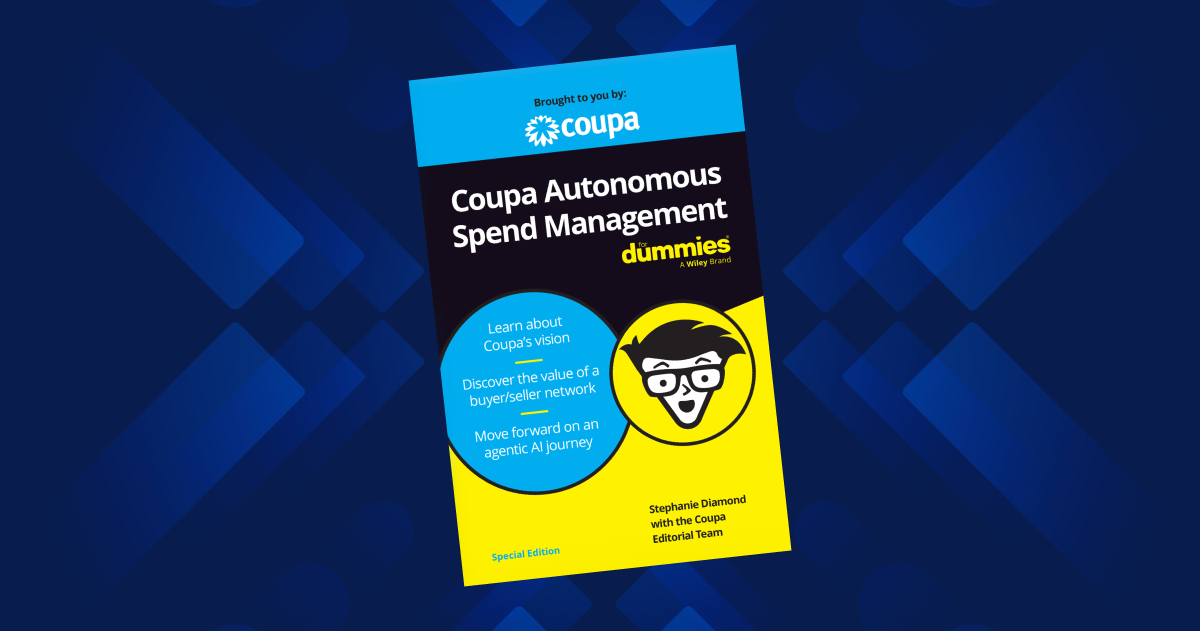
Coupa has mapped a practical path forward in our new e-book, Autonomous Spend Management For Dummies. In this blog, we’ll summarize a four-step path for procurement leaders to move their teams from AI experimentation to trusted, scalable autonomous procurement.
AI may feel new in most industries, but Coupa has been building AI into spend workflows for two decades. That matters, because a chatbot bolted onto your tech stack will not create a trusted autonomous process. Autonomy emerges from intelligence embedded directly into intake, approvals, sourcing, buying, invoicing, and supplier collaboration.
Coupa’s advantage is the combination of:
When your team builds on Coupa’s foundation, the journey to autonomy becomes a series of achievable steps.
What it is: AI supports decisions without taking action. It flags issues, recommends next steps, and helps teams prioritize.
What changes:
Outcome: Capture intelligence that’s hiding in your data.
Success signal: Your team can compare AI recommendations against their institutional knowledge and assumptions to validate the value.
What it is: AI helps people get work done faster. It drafts, summarizes, routes, and prepares actions for humans to take as next steps.
What changes:
Outcome: Reduce cycle time across processes.
Success signal: Stakeholders stop treating procurement like a blocker. Occasional requesters are asking for less help.
What it is: AI takes on defined tasks end-to-end, but with guardrails. Humans supervise, review, and step in on exceptions.
What changes:
Outcome: Benefit from fewer exceptions and cleaner audit trails.
Success signal: More throughput with the same headcount. Teams shift focus to strategic activities and customer relationships.
What it is: Within defined policies and thresholds, AI can act on its own: execute routine decisions, coordinate workflows, and resolve common exceptions.
What changes:
Outcome: Gain trusted autonomy — not “black-box automation.”
Success signal: Teams spend more time on high-impact initiatives, while routine, operational decisions happen continuously in the background.
Full autonomous procurement is a compelling destination, but most teams do not need to sprint to get there today. In fact, the smartest move is usually to progress step by step, proving value early, building trust, and strengthening governance as you go.
Each stage delivers real benefits. Even before full autonomy, procurement can shift from chasing work to shaping outcomes.
Coupa is built to support that journey. We embed AI directly into the workflows where procurement, finance, and suppliers already operate. That means AI is not a separate tool you have to “adopt” — it is intelligence that shows up inside the work you’re already doing.
Wherever you are today, we will help you take the next step with confidence — and capture meaningful gains all along the way. To see the full path and how to prioritize your first wins, download Autonomous Spend Management For Dummies.
Oh! It looks like you opted out from using the needed cookies. If you are interested in using the AI Agent, then please opt-in to the cookies in the preference center.
Update preferences