Coupa Named a Leader in the 2026 IDC MarketScape Worldwide AI-Enabled AP Automation Software for Large Enterprise

Coupa

Powered by AddSearch

fifty fifty landing hero Mobile Image

Respond to Supply Chain Disruptions Quickly

Stop material shortages, demand shifts, and shipping delays from slowing you down. Coupa Supply Chain Collaboration software manages direct, indirect, and MRO materials within one platform. It works with your current ERP system, so you can start right away without waiting to implement full procurement software first.
Secure direct material supply to prevent revenue loss

image4

Connect with all your suppliers through a single digital workspace

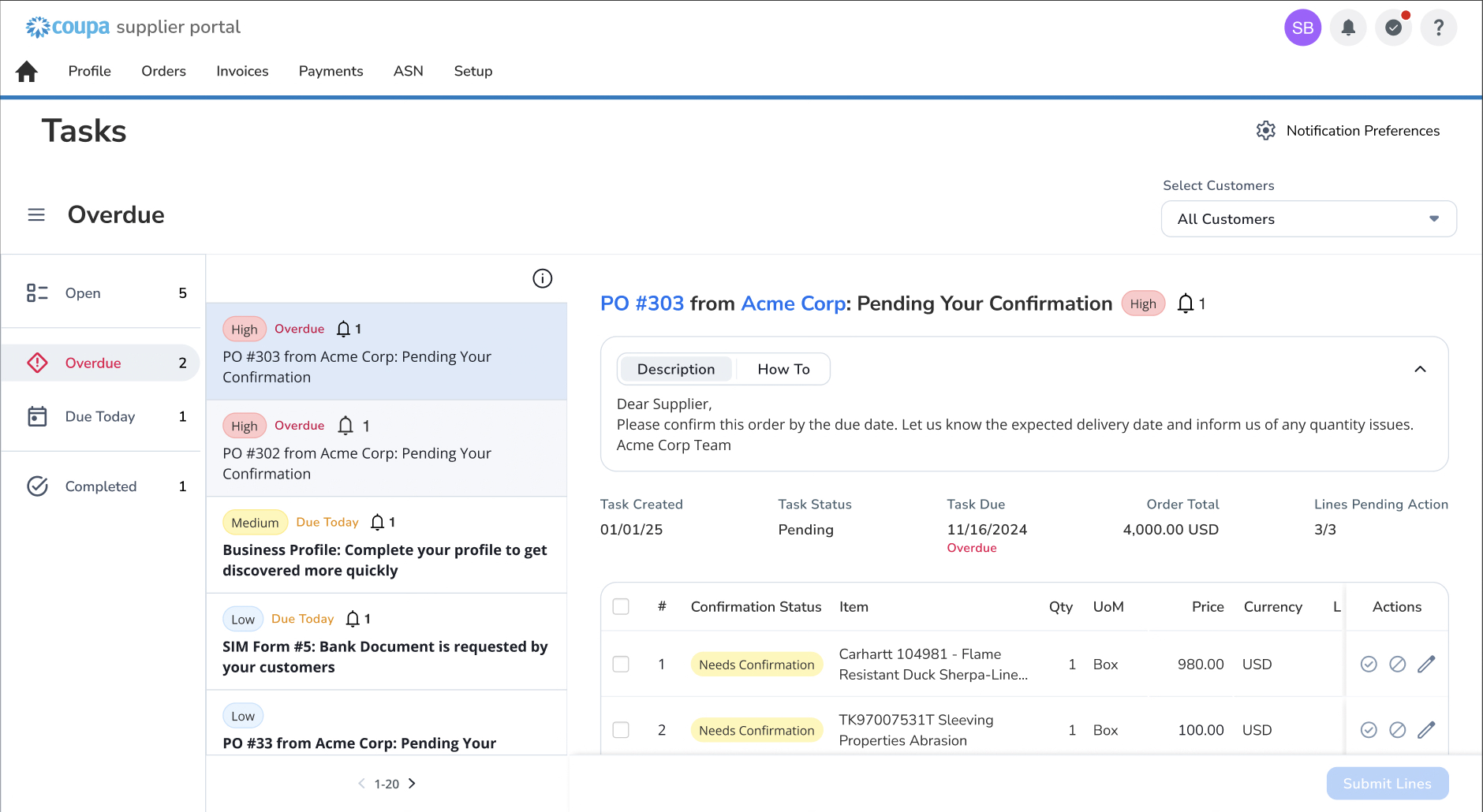
Supplier adoption determines the success of direct supply chain collaboration. Coupa Supply Chain Collaboration provides a single portal where suppliers manage purchase orders, delivery commitments, and inventory updates. Connected directly to your central enterprise data, this portal is completely free for suppliers, removing financial barriers to entry and driving rapid compliance across every tier.
  • Single portal access: Give suppliers one place to review orders, confirm delivery dates, and track invoices across all locations and business units.
  • Streamlined supplier onboarding: Accelerate supplier adoption with self-service registration links, standardized workflows, and built-in communication history.
  • Unified workbench for instant action and faster turnaround: Suppliers can instantly resolve, edit, or resubmit documents directly from workbench, eliminating the need to open transactions one by one and drastically slashing cycle times.
image1

Align material demand with supplier capacity to prevent shortages

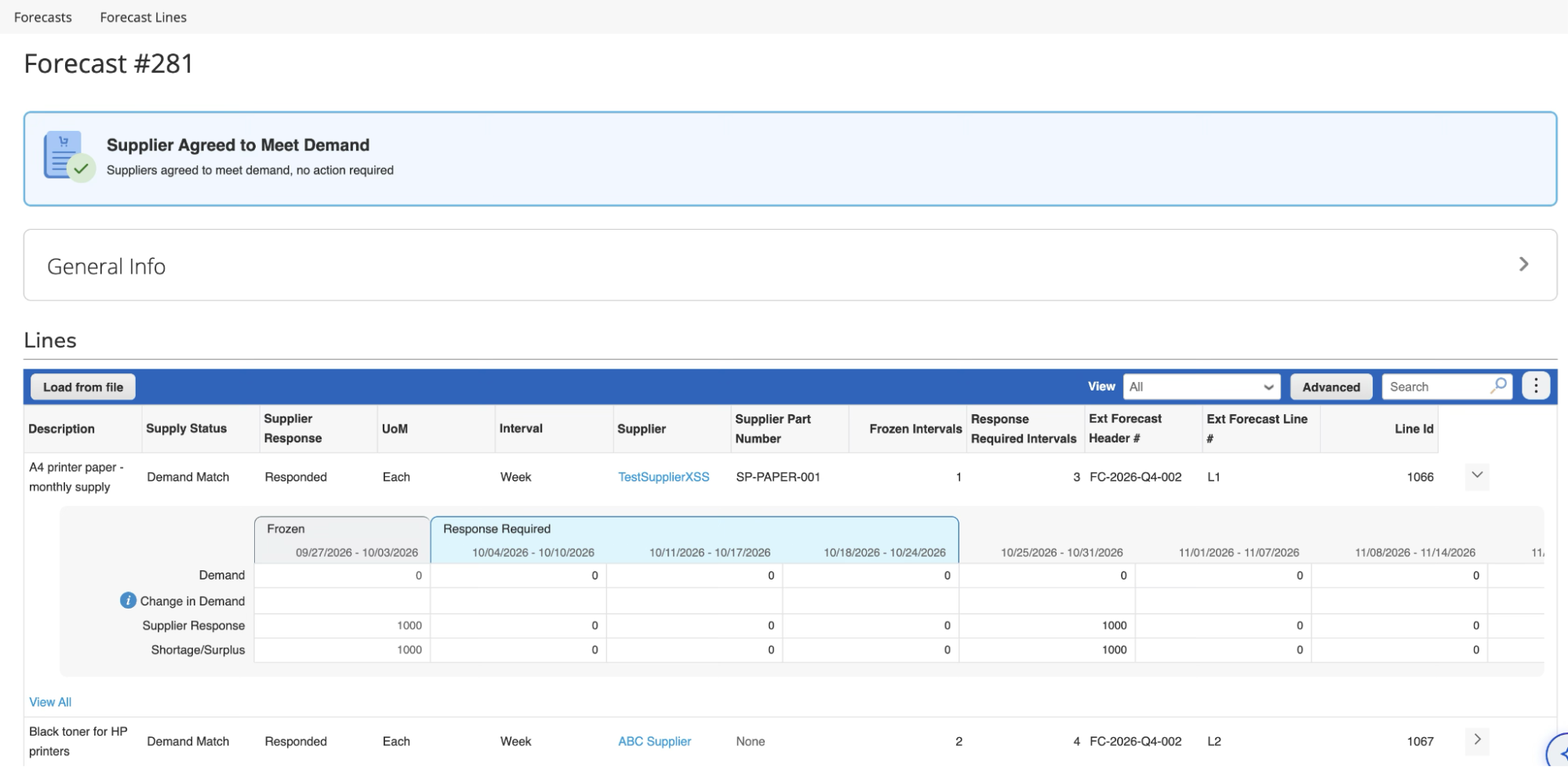
A disconnect between buyer demand forecasts and supplier inventory lead to stockouts or excess holding costs. Buyers and suppliers can share demand forecasts, track historical revisions, and collaborate on stock levels. By matching invoices directly to consumed inventory, companies eliminate payment errors and maintain steady material flow.
  • Multi-horizon forecast collaboration: Share demand forecasts with suppliers in real time while tracking historical changes to evaluate supplier capacity and planning accuracy.
  • Consigned inventory consumption matching: Base invoice approvals on actual inventory usage rather than initial delivery, eliminating payment disputes and administrative effort.
  • Demand-driven agility: Supplier Managed Inventory (SMI) empowers suppliers to own inventory decisions, delivering the right items and the right time based on direct demand signals. Integrate suppliers as a natural, proactive extension of your team to streamline physical material flows.
end-to-end-collaboration-resized

Automate high-volume delivery schedules and track order cycles

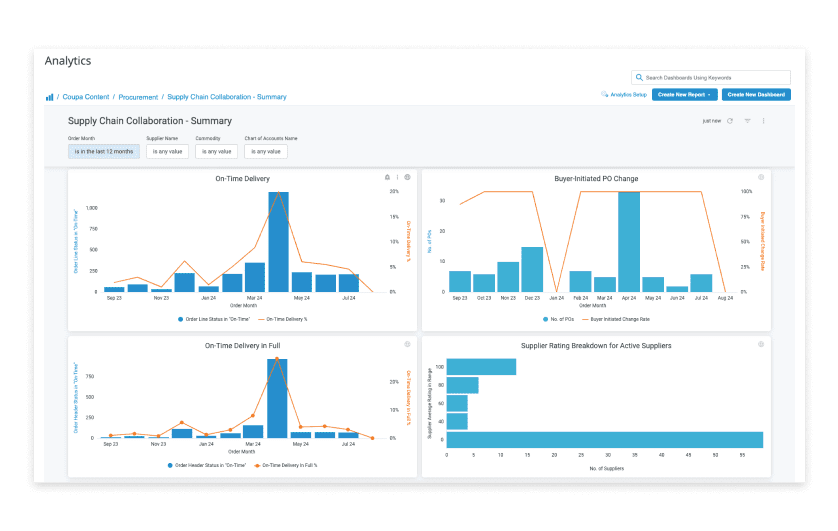
Managing high-frequency shipping schedules and order updates through manual emails creates administrative overhead, missed communication updates, and production delays. The platform automates long-term supply agreements and order confirmations by syncing continuous delivery schedules directly with your enterprise resource planning system. This ensures clear visibility into purchase order statuses, subcontract process progress and component availability, and delivery commitments across firm and forecast zones.
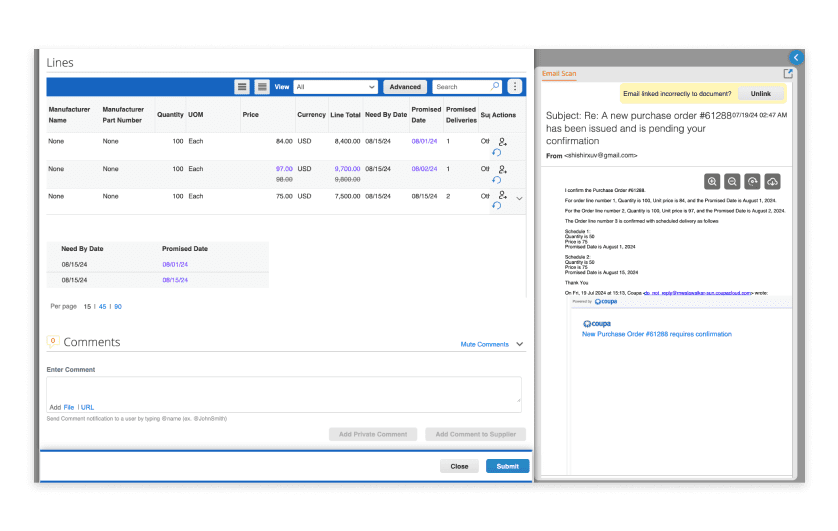
  • Automated schedule synchronization: Exchange real-time delivery schedule updates between your enterprise resource planning system and suppliers without manual order creation.
  • Comprehensive order and subcontract tracking: Monitor purchase orders, amount-based service lines, and subcontracting components with clear visibility into active updates and confirmations.
  • Structured commitment zones: Lock firm production windows to guarantee material delivery while keeping trade-off and forecast zones flexible for adjustments.
ai-driven-intelligence-resized

Automate complex supply chain tasks with conversational AI

Handling complex supply chain exceptions and analyzing massive forecast sheets manually overwhelms planning teams. Conversational AI assistants guide users through daily operations, translating natural language requests into instant system actions. The platform identifies delivery risks, highlights forecast anomalies, and automates repetitive data entry so your team can focus on resolving critical shortages.
  • Automated exception processing: Apply supplier updates across order lines automatically while using automated rules to flag date and quantity deviations for quick review.
  • Predictive risk detection: Identify pricing anomalies, late delivery risks, and inventory stockout exposures across thousands of line items instantly.
  • Conversational sourcing assistance: Allow buyers and planners to query inventory levels, track shipment statuses, and generate order summaries using simple language prompts.

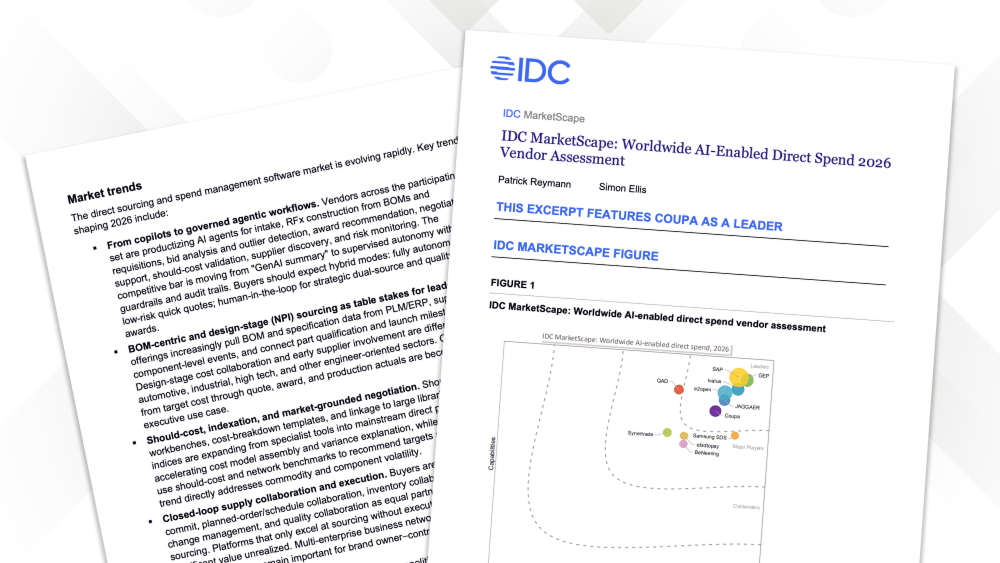
Real intelligence uses domain-specific data

AI trained on real business spend data comes to conclusions you can trust, with context, accuracy, and built-in policy compliance.

Explore More

Supply Chain Collaboration FAQs

Can I use Supply Chain Collaboration without setting up Coupa P2P first?

Yes, you can implement Supply Chain Collaboration standalone, without first implementing Coupa P2P.

What ERP systems does SCC work with?

SCC is ERP-agnostic and integrates with up to 160 systems, including SAP, Oracle, NetSuite, Microsoft, Infor, and IFS, as well as legacy and homegrown systems. It connects through cXML, XML, CSV, a browser-based UI, or system-integrated email, so you don't need to replace or overhaul what you already have.

I already use Coupa P2P, does SCC still apply to me?

Yes. SCC works standalone or alongside Coupa P2P, giving existing customers the same MRO and direct-material capabilities without a separate implementation track.

Do I have to buy modules separately?

No. It is a complete package that includes all features for one price.

How long does implementation take?

Most customers are up and running in a few weeks. Full supplier onboarding usually takes a few more months after that, so plan on roughly 3-4 months to get suppliers fully connected.

What type of spend is best for supply chain collaboration software?

Supply Chain Collaboration software works best for MRO, strategic or raw materials, direct materials, and transportation/logistics spend. These materials are critical for producing the company’s product or service. However, it also works well for indirect materials — goods and services that support a company’s operation, such as office suppliers, electronic equipment, or IT services.

The biggest benefit of Supply Chain Collaboration is having a single view into and more control over critical material orders and inventory, regardless of whether they’re categorized as direct or indirect.

What performance metrics are right for my company?

If your suppliers' on-time in-full (OTIF) performance is below 90%, your first-time invoicing accuracy for direct materials is below 90%, and/or your cost of goods sold (COGS) is 3x or 4x of your operating expenses, it’s a sign you could significantly benefit from Supply Chain Collaboration tools.

How do I get support for this product?

Coupa provides 24/7 support in multiple languages. Designated users may open tickets with our support team via the Compass Portal. The Compass Portal also hosts a searchable knowledge base, product documentation, software downloads, sample models, and an interactive online community.

Want to see Coupa in action?

See how millions have changed the way they work

Oh! It looks like you opted out from using the needed cookies. If you are interested in using the AI Agent, then please opt-in to the cookies in the preference center.

Update preferences