Volatile news. Stable spend.
Read the latest in the Coupa Business Spend Index™ Quarterly Update.
Get the Report





The market winced. Business spend held firm.
The Coupa Business Spend Index™ Quarterly Update

Achieving your company's strategic goals depends heavily on effective supplier relationship management (SRM). The foundation for these essential connections is laid during initial sourcing, but the real value comes from consistently nurturing these relationships once suppliers are onboarded. When you actively build strong partnerships, you gain committed allies who collaborate, innovate, and prioritize your needs. This dedication translates into tangible benefits like improved pricing, quicker turnarounds, and reliable support, ultimately moving your business objectives forward with greater efficiency and less risk.
Through fostering transparent communication and optimizing processes, you can elevate your vendors from simple commodity suppliers to invaluable strategic partners, creating a continuous cycle of trust and operational optimization that drives shared value, and ensures that your supply chain remains resilient, adaptable, and a direct contributor to achieving your business goals.
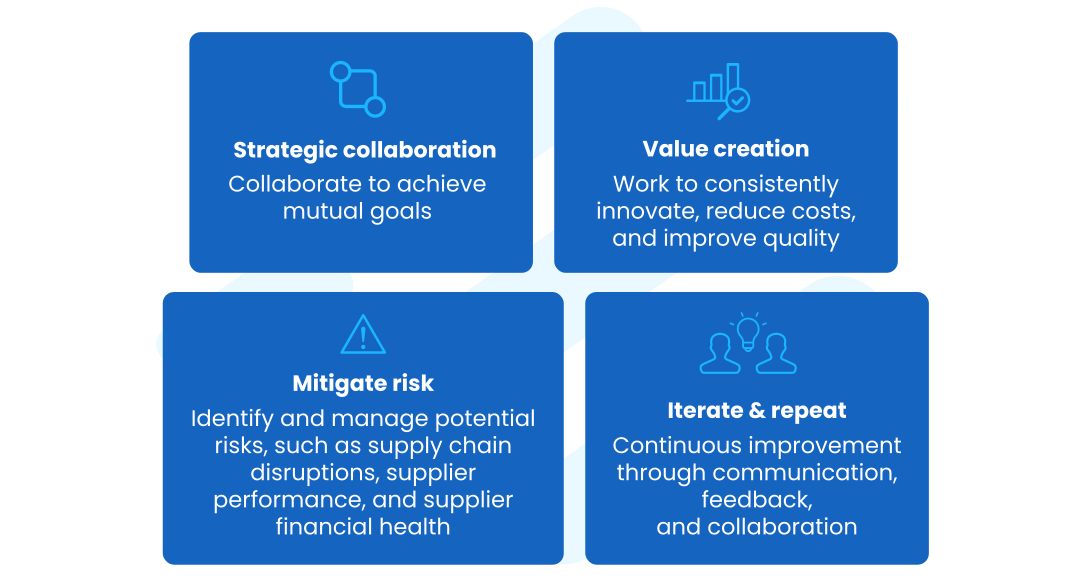
This dynamic process is built on core pillars: strategic collaboration, continuous value creation, proactive risk mitigation, and iterative improvement.
At its core, a supplier (often interchangeably called a vendor, retailer, or seller) is any individual or entity that provides the essential materials, goods, or services necessary for your business to operate, produce, and grow. From the raw materials essential for your core products to the software that runs your operations, suppliers are the backbone of your supply chain and directly influence your company's efficiency, quality, and market competitiveness.
Suppliers can be categorized by the nature and importance of what they provide:
These suppliers are the cornerstone for businesses that produce tangible goods. They provide raw materials, components, or finished products that directly go into creating your unique products or services. For a car manufacturer, this might be steel, tires, or electronic components. For a bakery, it's flour, sugar, and yeast. Supplier performance directly impacts your product quality, production schedule, and cost of goods sold.
These suppliers offer a variety of services that keep your business running smoothly, though they don't contribute directly to your final product. This category is vast and includes everything from janitorial services, IT support, cloud computing, and cybersecurity, to office supplies, utilities, and facility maintenance. While "indirect," the ongoing reliability is crucial for maintaining efficient and compliant operations.
These entities manage the financial ecosystem of your business. This can include banks, lenders, credit providers, investors, and other financial institutions that provide capital, manage transactions, process payments, and offer financial advisory services. Their support is fundamental efficient cash flow, investment capacity, and overall financial health.
This category encompasses suppliers that provide specialized support to help you reach your market, grow your brand, and manage strategic functions. Examples include marketing agencies, logistics and distribution companies, consultants, legal firms, and human resources providers. They play a vital role in expanding your market reach, optimizing your operational strategies, and ensuring compliance.
Regardless of your business size, whether you're a small enterprise managing a handful of critical vendors or a large corporation overseeing a vast, diverse pool of global suppliers, understanding who your suppliers are, establishing clear communication channels, and building strong, mutually beneficial relationships are fundamental. These connections are not just transactional; they are strategic partnerships that drive innovation, mitigate risk, and streamline value across your business.
More than a “nice to have,” strong supplier relationships are a strategic imperative for modern businesses. These connections influence everything from market responsiveness and cost efficiency to innovation and financial health. When you cultivate truly collaborative partnerships, rather than mere transactional exchanges, your business gains significant competitive advantages.
The shift from a commodity-level vendor transaction to a trusted supplier partnership offers big benefits:
One of the most compelling arguments for robust supplier relationships lies in their direct impact on working capital efficiency. According to the 2024 J.P. Morgan Working Capital Index, billions of dollars are trapped within inefficient processes. For buyers, this means over $353 billion locked up in excess inventory, while suppliers contend with $223 billion in delayed receivables.
This highlights a critical opportunity:
By investing in strong supplier relationships and leveraging the right technology to streamline procurement workflows, organizations can move beyond transactional inefficiencies. This strategic approach transforms your supply base into a powerful engine for mutual growth, significant cost savings, and a more resilient, high-performing supply chain.
Real-world success stories underscore the power of these relationships:
Australian Unity, a company providing health, wealth, and care services to communities across Australia, was manually placing orders with suppliers via phone and manually approving POs. This process gave little insight into the key suppliers and the amount spent company wide, increasing risk and limiting savings.
Solution: With Coupa, Australian Unity implemented AI-driven workflows across procure-to-pay, driving efficiencies and enabling the company to grow and focus on relationships. This included using the Coupa supplier portal for supplier relationship management to communicate, manage invoices and payments, and assess risks — streamlining these relationships.
Building robust supplier relationships comes with challenges. From intense competition for specialized providers to ensure long-term strategic alignment and efficient collaboration, proactively managing these relationships is key. You can work to foster a more stable and resilient supply chain by addressing these challenges head on and considering these actionable strategies
Securing unique products or highly specialized services can mean navigating intense market competition, often magnified by geographical limitations or scarce resources. A lack of centralized supplier data can complicate your ability to identify and engage the best partners.
What you can do:
Before signing any contract, it's important to verify a supplier's capabilities, financial stability, and ethical standing. Inadequate due diligence can lead to significant operational disruptions, financial losses, and compliance risks.
What you can do:
Establishing the partnership is just the beginning. Continuous engagement and performance monitoring is essential, even the best initial supplier relationships can falter from shifting market dynamics, unmet expectations, or inefficient communication.
What you can do:
By proactively addressing challenges with integrated technology, structured processes, and a collaborative mindset, you can build a stable, trustworthy, and high-performing supplier base, directly contributing to your overall business resilience and growth.
Beyond initial sourcing and ongoing management, successful supplier relationships rely on effective supplier enablement. This critical process ensures that your suppliers are quickly quickly and easily integrated into your procurement workflows and offers fast, frictionless ways for suppliers to begin transacting with your organization, whether it's submitting invoices, confirming orders, or updating their information. This is where selecting the right technology that includes comprehensive supplier onboarding software tools is important.
Why frictionless supplier enablement matters:
Supplier enablement isn't a one-size-fits-all process; it must evolve based on the strategic importance of each supplier. A nuanced, tiered approach ensures resources are allocated effectively and support matches the relationship's value:
Getting enablement right requires cross-functional collaboration. The need for effective supplier enablement resonates across various departments, including procurement, accounts payable, IT, and legal. An integrated platform can provide a unified environment for all stakeholders, bridging departmental silos and ensuring a consistent, efficient experience for every supplier.
By prioritizing strategic supplier enablement, you can foster stronger, more productive, and mutually beneficial supplier relationships from day one and throughout the relationship.
Questions to ask yourself:
If you answered yes to any of these then the next question should be, what if we do nothing?
You’ll likely find that doing nothing is too risky and it’s time to develop a strategy for managing your suppliers and formalizing the process around sourcing, onboarding, enablement, managing to build the strong bonds that will provide efficiencies and cost savings.
Oh! It looks like you opted out from using the needed cookies. If you are interested in using the AI Agent, then please opt-in to the cookies in the preference center.
Update preferences