Volatile news. Stable spend.
Read the latest in the Coupa Business Spend Index™ Quarterly Update.
Get the Report





The market winced. Business spend held firm.
The Coupa Business Spend Index™ Quarterly Update

When tariffs spike or markets shift overnight, controlling company spending is critical to remain competitive. Yet 41% of finance leaders say data challenges slow their ability to respond to such changes, according to the latest Strategic CFO Report. Siloes emerge when procurement, finance, and end users rely on separate systems — or worse, use spreadsheets and email chains to manage requests, approvals, and payments.
Without a unified process, employees often sidestep procurement, turning to quick fixes, workarounds, or preferred suppliers that fall outside of approved contracts. As every procurement and finance leader knows: you can’t control what you can’t see. Procurement orchestration solves this by unifying workflows across the organization, giving teams real-time insight to control costs and mitigate risk.
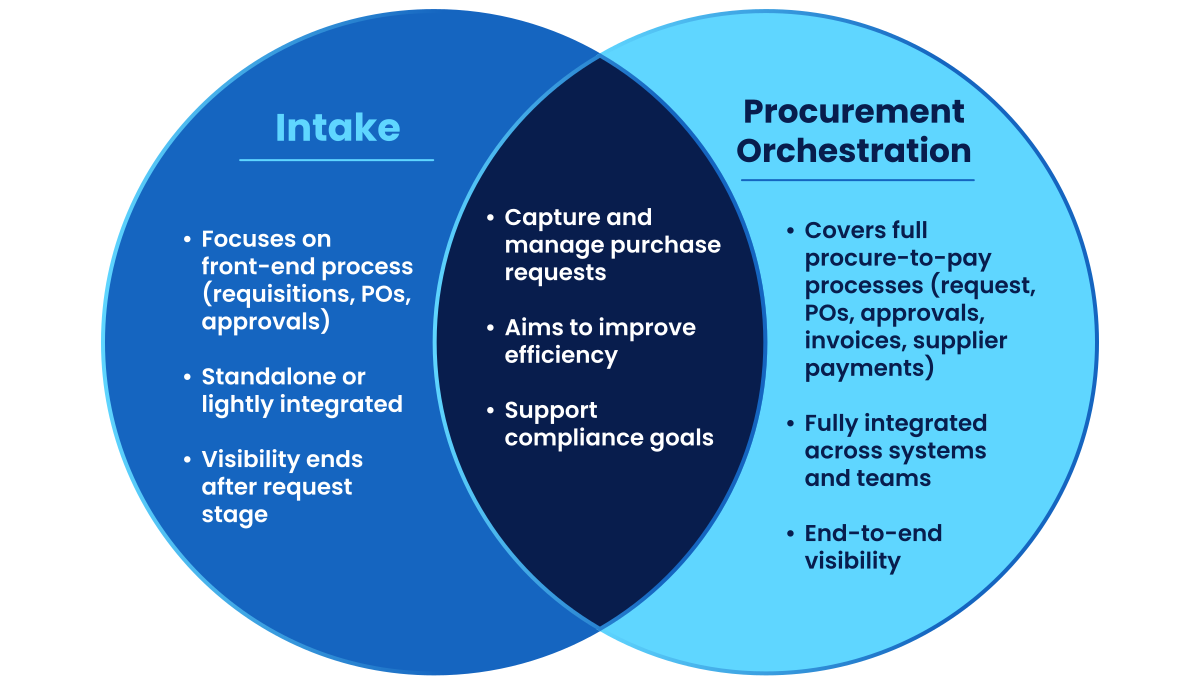
Procurement orchestration is the strategic approach to unifying procurement processes, systems, and stakeholders into connected workflows — typically on one platform. It involves the strategic coordination of people, processes, and technology to align procurement management and optimize company spending.
Many people think intake and orchestration (aka procurement orchestration) are the same, but they’re not. Digital intake solutions do a good job on the front end of procurement, capturing requisitions and purchase orders from end users. But they fall short of delivering full visibility and control. Finance can’t see the cash impact of requests in flight, procurement can’t track compliance beyond the request, and end-users might get stuck in approval bottlenecks. Procurement orchestration solves this by linking the intake process to every stage of the procure-to-pay lifecycle — approvals, supplier data, compliance checks, and even payments. It becomes even more efficient and optimized if it happens on one unified platform.
As procurement evolves from cost-cutting to strategic value creation, pressures like supply chain disruptions, ESG demands, and digital transformation make alignment with finance essential. Procurement orchestration unites both functions around a single source of truth, automates manual tasks, and captures data — enabling faster approvals and smarter sourcing decisions.
When a port strike halts shipments or a new trade policy drives up costs overnight, organizations without a comprehensive view of spend are left scrambling. High-performing companies with sophisticated intake and orchestration capabilities unified on a P2P platform can respond quickly, adjust sourcing, tighten controls, and capture measurable results, with an average of 8.1% overall spend savings. These outcomes are built on a few key pillars that work together:
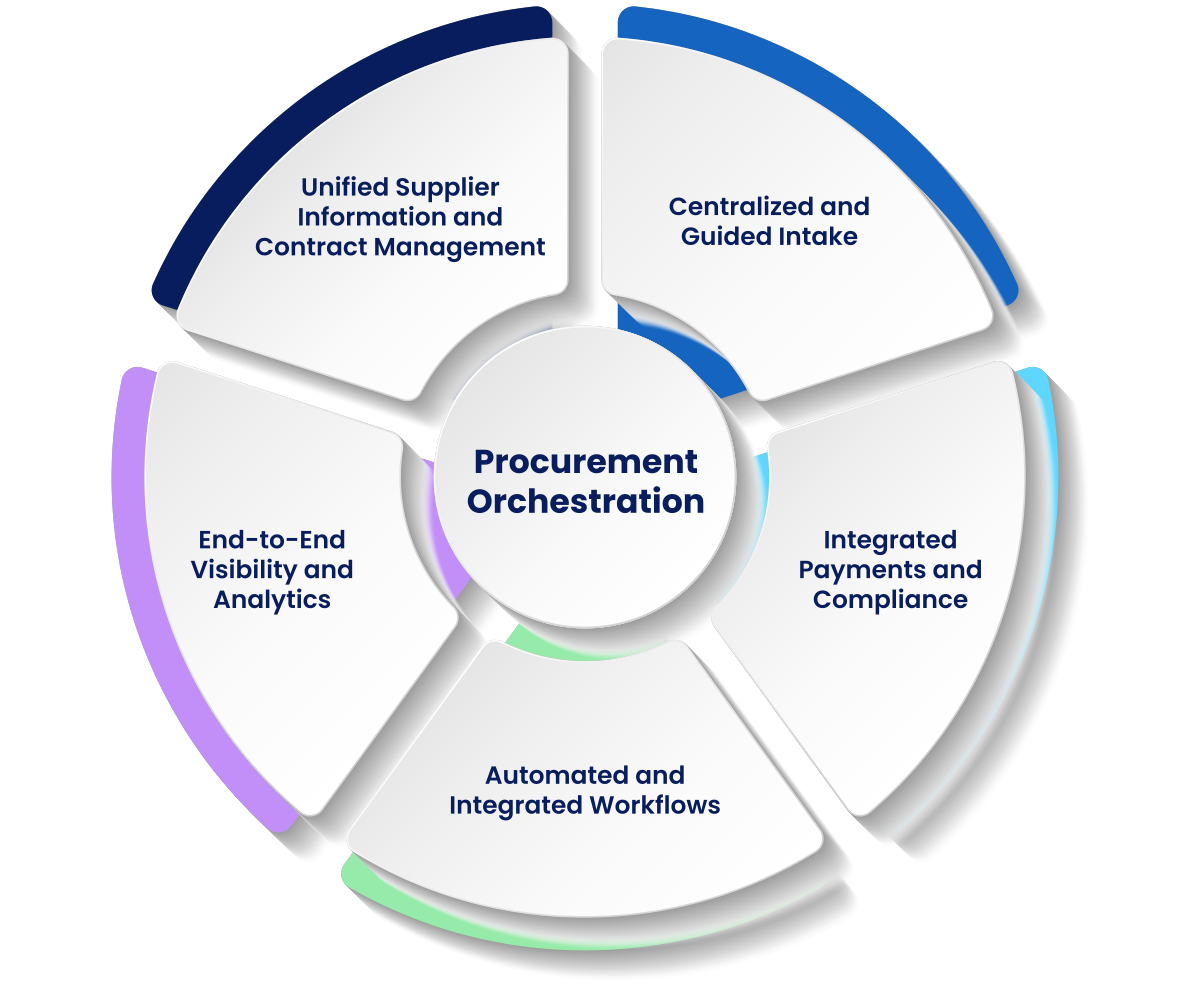
Intake — the process of collecting requests for goods and services — should be simple and fast. The goal is to make it easy for employees to request what they need while ensuring compliance from the start. It includes:
By centralizing this information, procurement and finance can consolidate spend, surface preferred vendors, and approve requests faster. The technology powering intake needs to be user-friendly. If it’s clunky or requires too many steps, people aren’t likely to adopt and adhere to procurement policies.
Manual approvals and disconnected, modular tools create data silos that slow procurement and finance down. Automated, unified workflows streamline the entire P2P lifecycle, ensuring everyone works from the same data and starting point. It includes:
As organizations grow and spend scales, automation is key in preventing bottlenecks and enforcing compliance. Future-ready platforms that unify intake and orchestration enable real-time visibility across every transaction and provide easily configurable approval workflows.
Strong supplier relationships are the backbone of effective procurement. Orchestration unifies supplier onboarding, risk monitoring, and contract management in one place. It includes:
This not only speeds up the identification of the best partners but also allows procurement to negotiate strategically and strengthen supplier collaboration. For finance, it uncovers savings opportunities, reduces risk, and makes it easier to manage payments to suppliers more effectively. A unified approach means fewer surprises and stronger, long-term partnerships.
Without integration, accounts payable (AP) and finance teams juggle multiple payment methods, currencies, and compliance checks manually. Orchestration brings structure, optimization, and automation. It includes:
By unifying payments with the rest of the P2P process, procurement orchestration helps suppliers get paid faster and enables finance to flex payment terms with greater visibility. It results in stronger supplier relationships while maximizing savings and optimizing working capital.
It’s hard to improve when there’s no data available as a baseline. Orchestration on a P2P platform provides full visibility across operations so leaders can track performance and benchmark it against peers. It includes:
Having a centralized procurement orchestration process ensures the company is collecting and acting on accurate data.
Many organizations might not realize they’ve outgrown their current procurement processes until problems start piling up. Here are some of the most common warning signs that it’s time to consider procurement orchestration.
Intake solutions attempting to retrofit orchestration can capture requests and purchase orders well, but they rarely go further than that. Most lack deep integration with sourcing, contracts, invoices, or ERPs — forcing manual handoffs, duplicate work, and inconsistent data. For AP teams, this means chasing context across fragmented systems while managing different payment methods, currencies, and gateways on their own.
AI in procurement is another missed opportunity. Companies need vast and accurate data to leverage AI, but intake tools only cover one piece of the P2P lifecycle. Without visibility into the full process, organizations can’t unlock the real insights or efficiencies driven by AI technology. See all the ways intake narrow tools hold you back in today’s market in our Beyond Intake: Building a Strong P2P Foundation for Growth e-book.
Coupa Intake & Orchestration, part of Coupa’s Agentic Spend Management platform, starts with an initial intake experience and connects seamlessly to the entire P2P cycle. AI-powered workflows surface preferred vendors and embed purchasing policies directly into the buying experience. With real-time budget visibility, community-informed vendor recommendations, and AI insights, procurement and finance gain the control they need to make smarter and faster decisions. No more switching between systems. Send a request, approval, PO, and payment all from one place.
Oh! It looks like you opted out from using the needed cookies. If you are interested in using the AI Agent, then please opt-in to the cookies in the preference center.
Update preferences