Drive smarter spend strategies with AI
See what exceptional performance looks like and learn how to close the gaps.
Get the Benchmark Report




Coupa Named a Leader in the 2026 IDC MarketScape Worldwide AI-Enabled AP Automation Software for Large Enterprise

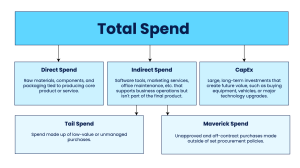
Tail spend management is the strategic approach to controlling low-value, low-visibility purchases that fall outside of an organization’s strategically managed spending. These purchases typically appear in indirect spend, which includes the goods and services that support the business but aren’t part of the final product. Think task management SaaS tools, office cleaning services, or new keyboards — small purchases that seem insignificant on their own, but collectively drain budgets and create administrative chaos.
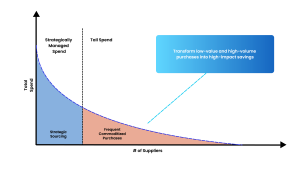
While direct spend and its accompanying large vendor contracts tend to get the most focus, indirect spend is often overlooked, creating pockets of unmanaged tail spend that can add up fast. And in a market where budgets are tight and volatility is high, gaining control of these costs can unlock meaningful savings and reduce risk. Companies that leverage AI-powered procurement tools see a 24.4% increase in visibility into their total spend, helping them spot and control costs with precision.
Tail spend is typically characterized by numerous low-value purchases made across multiple suppliers. Keep in mind that how each organization defines tail spend can vary significantly, depending on their specific needs and industry. However, there are a few general signs of tail spend:
While these indirect purchases are essential to keep the business running, they’re fundamentally different from larger, strategically managed categories of spend — and they require a different approach. Direct spend is managed through strategic sourcing and strong supplier partnerships. On the other hand, indirect spend is best managed through standardized purchasing channels and vendor consolidation to maintain visibility and control over costs.
When organizations take steps to manage tail spend properly, the impact is immediate. It reduces unexpected expenses and provides the team with a more accurate view of their budgets. In today’s environment — where departments are often asked to do more with less — this clarity helps leaders rein in unnecessary costs without slowing the business down. It also gives teams time back that was previously spent on manual one-off buying. At the same time, finance gets cleaner data for forecasting, and procurement can focus more on strategic initiatives instead of chasing down stray invoices. Overall, it’s an efficient way to save time and money.
But here’s the reality: Most organizations haven’t taken these steps yet. Finance and procurement leaders know tail spend exists — they just don’t realize how much it’s costing them until they start digging into the data.
Tail spend and maverick spend are often confused, but they describe two different problems in procurement. Tail spend refers to low-value, high-volume, or hard-to-track purchases that fall outside the organization’s strategic sourcing efforts. These purchases don’t necessarily break any rules — they’re just small, scattered, and typically unmanaged.
Maverick spend, sometimes called rogue spend, is different. It occurs when employees buy goods or services from unapproved channels or contracts, bypassing procurement policies altogether. Someone might conduct a quick online search, find a product they need, use their personal credit card to purchase it, and then expense it later without prior approval. This also frequently occurs with a type of maverick spend called shadow IT, where employees purchase unauthorized SaaS or cloud storage, creating security vulnerabilities and noncompliant third-party access.
While these two spend categories can overlap — because maverick purchases end up in the tail — they aren’t interchangeable. Tail spend is defined by its size and visibility, while maverick spend is defined by noncompliance.
Effectively managing tail spend requires the right mix of organization alignment, streamlined processes, and modern technology. Tail spend is often scattered and decentralized, so bringing structure to how people buy and how that data flows is essential. Here’s the role each area plays:
Organization alignment: There needs to be clear purchasing policies established, along with designated individuals who will own tail spend management and how decisions should flow.
Process improvements: Centralized and easy-to-follow processes are crucial for reducing tail spend. If buying pathways are confusing, employees will not adopt them. Standardized workflows also make it easier to collect accurate spend data.
Technology enablement: Procurement platforms — ideally with native AI — can guide buyers toward preferred options, automate routine low-value transactions, and streamline approvals. With all activity flowing through a centralized platform, spend analytics becomes far more powerful for spotting waste and hidden risks.
Together, these elements build the foundation for effective tail spend management. But how do you know if your tail spend management efforts are actually working? That’s where key performance indicators come in.
Effective tail spend management requires clear metrics. These KPIs help you understand your current position and track your progress as you implement a plan to address non-strategic spending.
| Top Tail Spend KPIs | |||
|---|---|---|---|
|
Structured Spend |
On-Contract Spend | Spend with Primary Suppliers | Requisition-to-Order Cycle Time |
| Higher is better | Higher is better | Higher is better | Lower is better |
| How many purchases are routed through company-hosted or vendor-hosted catalogs? | How many purchases are through pre-negotiated contracts? | How many purchases are going through preferred or strategically selected suppliers? | What is the average time it takes to process purchase orders? |
| Best-in-Class Companies’ KPIs 2025 Coupa Total Benchmark Report |
|||
| Structured Spend
55.3% |
On-Contract Spend
81.1% |
Spend with Primary Suppliers
17.5% |
Requisition-to-Order Cycle Time 4 |
Ready to take action? Here’s your roadmap.
Before you can manage tail spend, you need to understand what qualifies as tail spend to your organization. Determine whether it should be defined by dollar threshold, the 80/20 rules, the number of suppliers, transaction volume, or a combination of these. The goal is to align stakeholders around a shared understanding, so when you later centralize spend, you’ll know exactly what you’re looking for.
Start centralizing purchase activities through simple, guided workflows. Automation helps capture data at the source and ensures every purchase moves through an approved process with clear visibility at every handoff. Look for guided intake and orchestration (not just intake) to connect every part of the procure-to-pay process and maximize efficiency and data consolidation.
This may sound complex, but modern procurement platforms have significantly simplified it. The key is choosing tools that employees will actually want to use, not systems that create more friction.
Once purchases are flowing through a centralized system, use the data to identify spending patterns. Spend analysis tools can look for duplicate suppliers, categories with excessively small purchases, and areas where items are often expensed after the fact. This is where you’ll see the first real picture and granular view of your tail spend.
Using the insights you’ve uncovered, consolidate duplicate or redundant suppliers and shift more volume to preferred partners. Wherever possible, set up PunchOuts or hosted catalogs with those suppliers to give employees a fast, guided way to purchase approved items. This makes it easy for every team to stay within the intended buying channels and leverage volume buying power in contracts. Think of this as creating the path of least resistance. When approved options are the easiest options, compliance becomes automatic rather than forced.
Tail spend management succeeds only when employees actually adopt new processes and technology. Provide clear guidance, training, and context to explain the rationale behind the changes being made. Identify departmental advocates or “super users” to help others follow the new workflows.
Use KPIs to track progress and refine your approach. Monitor structured spending, primary supplier spending, and other key metrics to ensure your strategy remains effective and aligned. Over time, this helps you stay ahead of new sources of tail spend as the business evolves or scales.
Even with a solid plan in place, you’ll likely face some hurdles. Because tail spend impacts every corner of the business, it can be difficult to control. Common issues, such as low spend visibility and inconsistent buying behaviors, can quickly inflate costs and create operational friction. Let’s dive into some of the challenges procurement and finance leaders face and how to overcome them.
Tail spend is scattered across departments, tools, purchasing cards, and inboxes, making it difficult to track where money is being spent. Without visibility, you’re essentially managing blind. And you can’t improve the patterns, pricing, or duplications you can’t see.
Tip: Centralize purchases through a single procurement platform or guided buying workflow so all transactions are captured in one place. The platform should be compatible with your ERP, ensuring that all operational data is connected and aggregated appropriately for more effective spend analysis.
One of the most significant signs of tail spend is purchasing the same commodity item or service from multiple suppliers, which increases administrative efforts and prevents organizations from negotiating better prices. Miete, a leading facilities and professional services provider in the UK, reduced its supplier base by 60% and got £2B in spend under management by using a single total spend management platform for all procurement activities.
Tip: Review your master supplier data list to identify redundancies and consolidate spend with primary suppliers. If possible, deploy automated supplier risk detection to flag high-risk suppliers and highlight those with strong performance. This makes it easier to focus contract negotiations on low-risk, reliable partners who can deliver better pricing and more consistent service.
Tail spend data is often messy and uncategorized, making it difficult to run accurate reports or identify saving opportunities. It can be even more challenging if an organization operates across different locations and tax territories. For Thoughtworks, this was the case with operations scattered across 18 countries. Today, the technology consulting company has 100% geographic visibility into its global spend and has significantly improved compliance with a platform that automates data cleansing.
Tip: Use technology that automatically categorizes and continuously cleanses data without manual intervention. Ensure that someone on the procurement team is actively responsible for managing tail spend and maintaining the accuracy of this data.
Selecting the right technology is one of the most important steps in gaining control over tail spend. The ideal platform should make purchasing easy for employees, improve spend visibility for procurement and finance teams, and automate routine tasks that traditionally consume time. When evaluating solutions, consider the following core features and capabilities.
AI-powered intake and orchestration can automatically surface preferred vendors, suggest compliant options, and reduce one-off purchases that require time-consuming supplier onboarding. Look for a platform with easy, no-code catalog creation — including hosted categories and PunchOuts — to simplify centralizing approved products and services.
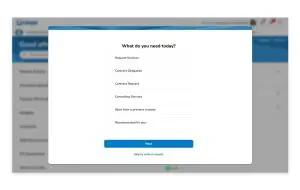
You should also seek out a guided intake tool that lets employees:
Some platforms offer access to collective buying programs that include pre-negotiated pricing with trusted suppliers. These programs help smaller or decentralized teams immediately benefit from volume-based discounts and better terms — especially for common indirect categories.
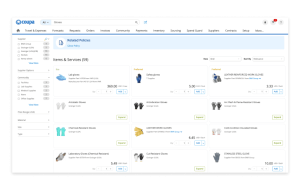
Controlling tail spend requires a quick setup, allowing teams to start moving spend into compliant channels without a lengthy implementation cycle. Choose software that enables rapid, compliant supplier onboarding and automated invoice processing with features like three-way matching and P-card reconciliation. This reduces manual effort, prevents errors, and ensures payments are made only for approved goods and services.
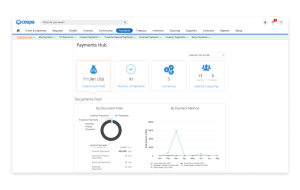
You need accurate spending data to understand how and where to manage tail spend effectively. Look for platforms that automatically cleanse, categorize, and unify data across systems, because data is only valuable if you can use it to make decisions. The best platforms don’t just collect data — they turn it into actionable insights.
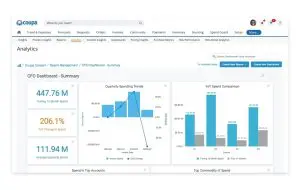
No-code dashboards and reporting make it easier for leaders to track KPIs and spot new savings opportunities. With Coupa, you’ll be empowered to compare your metrics against those of industry peers, helping you understand exactly where your processes lag and identify areas for improvement with the biggest impact.
With the right tools and workflows in place, tail spend becomes an opportunity, not a cost drain. Organizations using AI-native procurement platforms report an average 8.1% reduction in overall spend while improving requisition-to-order cycle times by up to 75%. To see how a modern procure-to-pay system can simplify buying and deliver immediate impact, take a closer look at Coupa’s AI-native Total Spend Management platform.
Oh! It looks like you opted out from using the needed cookies. If you are interested in using the AI Agent, then please opt-in to the cookies in the preference center.
Update preferences