Volatile news. Stable spend.
Read the latest in the Coupa Business Spend Index™ Quarterly Update.
Get the Report





The market winced. Business spend held firm.
The Coupa Business Spend Index™ Quarterly Update

Procurement can no longer operate on disconnected systems or outdated spreadsheets. The stakes are too high, with tariffs, supply chain disruptions, and rising material costs tightening margins. The best-performing companies use analytics in procurement to predict demand, assess supplier risk, and manage the entire procurement lifecycle with unprecedented speed and accuracy.
A shift is already underway, according to Coupa’s Strategic CFO Survey, where 100% of finance leaders say they’re currently using some form of AI to cut costs and increase productivity. Yet despite this widespread adoption, nearly 40% of finance leaders still lack full visibility into spend data, a dangerous gap that leaves them vulnerable when quick, data-driven decisions are critical.
The problem isn’t a lack of data. Most organizations are drowning in it. The real challenge is having the right data, at the right time, in a format that enables faster and more confident decisions. That’s where procurement analytics come in.
Procurement analytics collect, classify, and analyze procurement and financial data for actionable insights. It goes beyond traditional reporting by automating data preparation and connecting siloed sources. The focus shifts from reactive reporting to predictive and prescriptive intelligence.
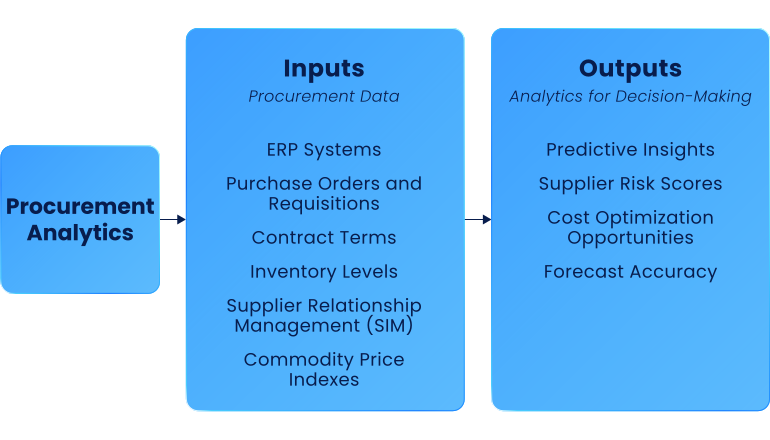
Modern procurement integrates data analytics from multiple systems — ERPs, procure-to-pay platforms, supplier relationship management tools, and more. For many companies, procurement data lives in too many places to tell a clear story. Adding an analytics tool on top doesn’t fix the problem — it just adds another layer. When data flows through a single, connected platform, analytics can deliver accurate, real-time insights that drive real impact. This creates a unified view of spending patterns, supplier performance, and process efficiency. This consolidated approach enables teams to move from asking “What happened?” to “What should we do next?”
The technology uses advanced algorithms, including machine learning, natural language processing, and robotic process automation, to analyze vast amounts of procurement data. These capabilities allow organizations to optimize supplier selection with detailed risk scores. They also identify spending patterns and cost-cutting opportunities while improving demand forecasting accuracy.
Procurement analytics build trust through clean, consolidated data that enables strategic decisions beyond cost savings. It reduces manual effort and accelerates procurement management processes. The visibility it provides helps align procurement strategy with broader organizational objectives.
For finance teams under pressure to do more with less, procurement analytics deliver the insights needed to align cost control with growth and resilience. It helps unlock capital trapped in manual processes and fragmented systems. Resources can then be redirected toward innovation and strategic initiatives.
Cross-functional collaboration improves dramatically. When procurement and finance teams share the same data and KPIs, they can collaborate on faster budgeting, more accurate forecasting, and coordinated strategies for maximum impact. Analytics provide a shared view of performance that eliminates the finger-pointing and miscommunication that plague organizations with scattered data.
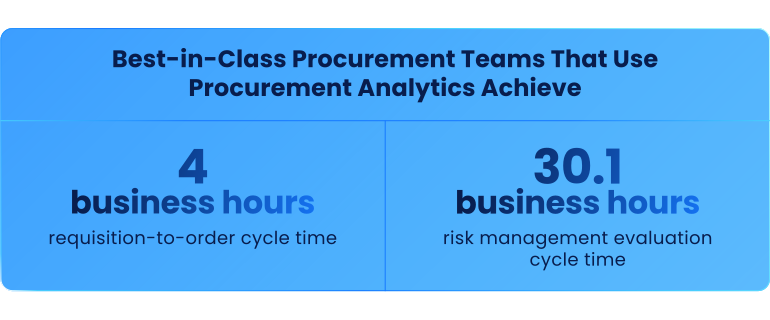
And the most significant benefit? Speed. Best-in-class procurement teams using AI-driven analytics tools reduce requisition-to-order cycle time to just 4 business hours and cut risk management evaluation cycles to 30.1 business hours.
Procurement analytics encompass four distinct analysis methods, each serving a different strategic purpose. Understanding when and how to use each method enables teams to extract maximum value from their data.
The Analytics Maturity Ladder
| Level | Method | Core Question | Focus | Example |
| 1 | Descriptive | What happened? | Historical reporting | Identify past spending patterns |
| 2 | Diagnostic | Why did it happen? | Root cause analysis | Find reasons behind cost overruns |
| 3 | Predictive | What will happen? | Forecasting | Anticipate demand or supplier risk |
| 4 | Prescriptive | What should we do? | Decision optimization | Recommend the best sourcing options |
Descriptive analytics answer “What happened?” by examining historical data. This method categorizes past spending and tracks supplier performance over time, identifying patterns in procurement activity.
For example, a manufacturing company might use descriptive analytics to discover that it purchased the same raw material from multiple suppliers at different prices throughout the previous quarter. This visibility creates immediate opportunities to consolidate suppliers and negotiate better rates.
Diagnostic analytics answer “Why did it happen?” by drilling into root causes. This method goes deeper than descriptive analytics to uncover the factors behind spending patterns. It reveals what’s causing delays or supplier issues.
A retail company noticing higher-than-expected spending in office supplies might use diagnostic analytics to discover that several departments are making off-contract purchases from non-preferred vendors. The analysis reveals the root cause: Employees find the approved requisition process too cumbersome, leading them to bypass it entirely.
Predictive analytics answer “What will happen?” by forecasting future trends. This method uses historical data and market trends, along with other variables, to generate accurate demand forecasts and anticipate supplier risks.
A popular shoe retailer might use predictive analytics to forecast which products will see increased demand during peak shopping seasons based on past data and current market trends. The procurement team can then adjust orders accordingly to meet demand spikes without overstocking.
Prescriptive analytics answer “What should we do?” by recommending specific actions. This is the most advanced form of analytics, using AI to simulate multiple scenarios and suggest optimal decisions.
An electronics manufacturer facing a potential supply disruption might receive prescriptive recommendations to shift orders to alternative suppliers and adjust inventory levels. The system might also suggest modifying production schedules, all calculated to minimize cost and operational impact.
Strong procurement analytics require tracking the right key performance indicators. These core procurement benchmarks help teams evaluate performance against peers and identify improvement opportunities.
Visibility of managed spend measures the percentage of spending accurately categorized and brought under management. Higher visibility enables better analysis and stronger sourcing strategies, providing clearer insights into where money goes.
Spend control tracks total cost savings achieved through sourcing events, contract negotiations, and process efficiencies. This metric demonstrates procurement’s direct impact on the bottom line and frees up capital for reinvestment.
Contract management cycle time measures the time between requesting a contract and having it signed by the supplier. Shorter cycle times accelerate time-to-value and help teams capture savings opportunities before they slip away.
Requisition-to-order cycle time tracks the average time from initial purchase request to final PO approval. Faster cycles ensure employees have mission-critical materials when needed, especially during changing conditions.
On-contract spend refers to the percentage of spend that goes through pre-negotiated supplier contracts. The higher the percentage, the more the organization benefits from negotiated pricing and consistent payment terms. Being seen as a critical buyer to suppliers also enables procurement to negotiate lower prices in the future
Spend with primary suppliers shows the percentage of total spending directed to preferred or strategic suppliers. Consolidating spend with trusted partners generates value through negotiated contracts and greater buying power.
Preapproved spend measures the percentage of invoiced spending linked with approved purchase orders. Higher preapproval rates improve compliance and preserve working capital by validating purchases before funds are committed.
Electronic invoice processing tracks the percentage of invoices submitted, approved, and processed electronically. Higher rates accelerate payment cycles, reduce errors, and improve cash flow visibility.
Supplier information management cycle time measures how quickly suppliers respond to digital requests to update their information. Faster response times reduce operational delays and improve agility.
Procurement analytics insight feeds directly into a long-term procurement management strategy. Clean, accurate data enables teams to shift from reactive purchasing to proactive planning that aligns with organizational objectives.
Finance leaders benefit from understanding the cash-flow implications of procurement decisions and identifying opportunities for working capital. For example, analytics might reveal that accelerating payment to certain suppliers unlocks early payment discounts that exceed the cost of capital, or that stretching payment terms with other suppliers optimizes Days Payable Outstanding without damaging relationships.
When U.K.-based Westbury Street Holdings needed better visibility into category spending, AI-powered dashboards revealed patterns the finance team had never seen before. The insights helped them reallocate resources more strategically and identify consolidation opportunities that drove measurable savings.
Similarly, facilities management company Mitie discovered through analytics that it was managing far too many suppliers for its scale. By consolidating its supplier base by 60%, it not only simplified operations but also negotiated substantially better rates with its remaining partners.
Bank of Montreal leverages AI insights from the Coupa community to maintain visibility across its entire supplier lifecycle. Real-time data enables their team to make strategic decisions about supplier relationships and contract renewals before issues escalate, while continuously monitoring risk factors that could impact operations.
The most successful organizations use procurement analytics not only to cut costs, but to create value across the entire business. They improve supplier relationships and reduce risk, ensuring compliance and driving innovation.
Implementing procurement analytics requires a systematic approach that prioritizes data quality, clear objectives, and continuous improvement.
Begin by identifying all sources of procurement across your organization: ERP systems, procure-to-pay platforms, supplier management tools, contract repositories, and financial systems. Extract this data into a centralized location to be consolidated and analyzed holistically.
Even better if you use a unified Agentic Spend Management platform. Instead of manually pulling and reconciling information from multiple tools or using a third-party tool, advanced platforms can do this for you. This connected approach accelerates data collection and eliminates inconsistencies for a strong foundation for predictive insights.
Raw data contains errors and inconsistencies. It often includes duplicate records and missing information, which degrade the quality of analytics. Use AI data cleansing tools to automate the tedious process of standardizing formats and help remove duplicates and correct errors. AI-powered classification automatically categorizes spending into meaningful taxonomies tailored to your business needs.
Most organizations cleanse their data once during implementation, then never again. This creates cascading problems over time. Establish quarterly data cleansing cycles to maintain data integrity as suppliers change, systems evolve, and business needs shift.
With clean data in place, deploy procurement analytics tools that provide the insights your team needs. Start with descriptive analytics to understand current spending patterns, then layer in diagnostic capabilities to identify root causes. As your analytics maturity grows, incorporate predictive and prescriptive capabilities that forecast trends and recommend actions.
Create customizable dashboards that make insights accessible to stakeholders across procurement, finance, and business units. The best analytics platforms deliver insights in context, highlighting anomalies and opportunities without requiring users to dig through raw data.
Analytics only create value when they drive action. Establish clear workflows for responding to insights. This might mean launching sourcing events when spend becomes concentrated with a single supplier or a group of suppliers, creating risk if those partners face disruption. Teams might investigate compliance issues flagged by anomaly detection. Or they could adjust inventory levels based on demand forecasts.
Even with the right technology, organizations face obstacles when adopting procurement analytics systems.
AI relies on high-quality, consistent data, yet procurement data is often scattered across systems or incomplete. Many organizations struggle to use their procurement data to its full potential, limiting the accuracy and value of analytics insights. CPOs surveyed by McKinsey & Company said less than 20% of their organizations’ available procurement data was currently used.
Solution: Invest in a spend management platform that automatically performs data cleansing, normalization, and enrichment. Implement data quality checks routinely to identify gaps and validate processes, ensuring the most accurate data feeds your analytics.
Integrating AI analytics solutions with legacy procurement systems can be complex and costly, especially when dealing with outdated architectures or incompatible data formats.
Solution: Collaborate with an AI solution provider that offers flexible integration options that are compatible with your specific systems. Consider middleware partners for API-based integration plans that bridge newer AI platforms with older procurement software. Look for providers delivering continuous updates to AI algorithms, allowing you to apply AI effectively with existing IT resources.
Resistance to change and fear of job displacement can hinder analytics adoption among procurement teams. Employees accustomed to manual processes may struggle to trust automated insights or feel threatened by technology they don’t understand.
Solution: Involve users before implementation to understand their pain points and opportunities for using analytics in their roles. Start with well-defined use cases that provide tangible benefits like time savings and improved decision-making. Offer comprehensive training programs and leverage peer-to-peer training to familiarize users with the technology.
Most importantly, communicate clearly and openly that analytics enhance employees’ creative and strategic capabilities. It doesn’t replace them. AI handles repetitive tasks so people can focus on high-value work that requires judgment, relationship-building, and strategic thinking.
Selecting the right procurement analytics software requires careful assessment of capabilities, security, and alignment with organizational needs.
Analytics solutions use sensitive procurement data, including pricing, supplier information, and strategic plans. Ensure your provider never shares or sells this data to third parties or uses it to train external AI systems. Look for compliance with relevant data protection regulations — HIPAA, SOC 1, SOC 2, FedRAMP Moderate, and others — plus the highest security standards with encryption, secure data storage, and regular security audits.
Since AI features automatically make decisions or recommendations, bias mitigation is crucial. Any provider should explain its AI’s decision-making process and demonstrate how it mitigates biases in data and analytics.
The solution must integrate various aspects of the procurement process for end-to-end coverage. Seamless integration with other enterprise systems is essential. Think ERP, finance, and supply chain management tools. As the organization grows, the platform needs to handle increasing data volumes and users while maintaining performance. These integration and scale requirements are the defining characteristics of enterprise procurement, where analytics must span every system, region, and business unit.
Look for solutions with API availability for custom integrations and workflow modifications, or a platform that can handle all aspects of procurement from end to end, so teams don’t need to make modifications as you scale. This flexibility enables them to adapt the analytics platform to specific procurement processes as business needs change.
Technology is only useful if people leverage it effectively. Look for an AI solution provider with expertise in procurement that offers easy-to-use tools and guided training. AI trained on established procurement best practices provides the groundwork for efficient processes that procurement departments can adopt quickly.
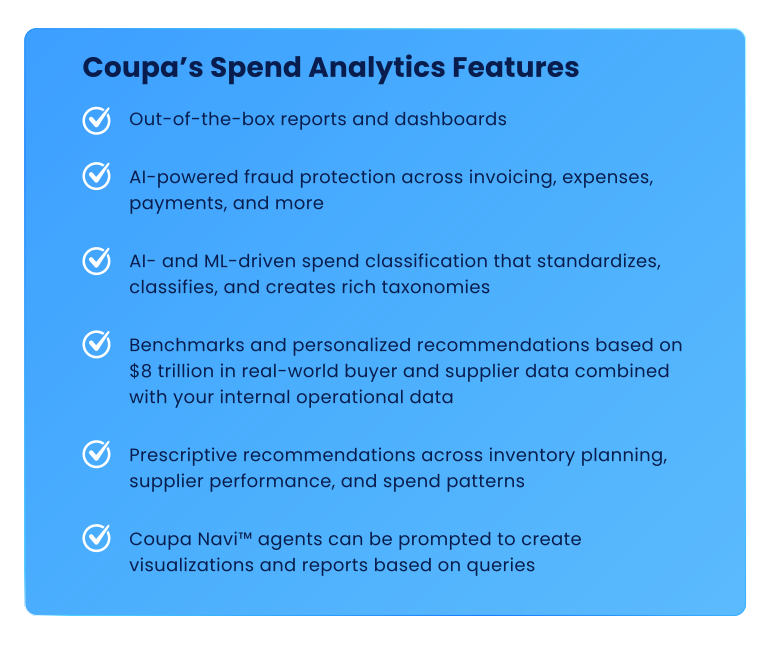
Key features to prioritize:
Advances in artificial intelligence and changing business requirements are transforming analytics for procurement from reactive reporting to strategic foresight.
AI in procurement is transforming how organizations analyze data and make decisions. Machine learning algorithms continually improve accuracy by learning from historical patterns, while generative AI creates new capabilities, such as autonomous contract drafting and intelligent supplier negotiations. AI will transform procurement over the next five to 10 years, shifting it from a primarily operational to a highly strategic, predictive, and value-driven approach.
Traditional procurement analytics relied on periodic reports, which were often outdated when stakeholders reviewed them. Modern platforms deliver real-time visibility into spending and supplier performance. They expose process bottlenecks through dynamic dashboards and interactive visualizations. This immediacy enables faster response to market changes and operational issues.
Growing pressure to meet environmental, social, and governance goals is reshaping procurement analytics. Organizations now track suppliers’ ESG performance by scanning third-party reviews, regulatory reports, and certifications. Analytics platforms help monitor progress toward sustainability targets and identify opportunities to reduce supply chain emissions or increase spend with diverse suppliers.
Community intelligence, powered by anonymized, aggregated data from millions of transactions, provides unprecedented benchmarking capabilities. Rather than comparing performance only against internal historical data, organizations can now see how they stack up against peers and identify best practices from top performers across industries.
To stay current with these developments and assess how to incorporate advanced analytics into their procurement strategies, organizations should regularly evaluate their analytics maturity and technology capabilities.
Coupa’s AI-native procurement platform delivers end-to-end analytics that support procurement and finance teams with the visibility, speed, and intelligence needed to multiply margins and build business resilience.
Built from nearly two decades of AI experience. As one of the first platforms to integrate AI into spend management tools, Coupa prioritizes innovation backed by procurement domain expertise. The platform’s automation and AI capabilities are purpose-built to provide practical, easy-to-use workflows that teams can adopt quickly.
Community-powered intelligence from $8 trillion in transactions. Coupa leverages anonymized, aggregated data from over 10 million real-world suppliers and buyers on its platform to deliver actionable prescriptions and recommendations. The models identify trends and provide detailed supplier ratings to surface insights unavailable anywhere else.
Highly secure and ethically compliant. Coupa provides extensive public documentation on AI architecture, testing measures, and policies. Sensitive data receives comprehensive protection, meeting regulatory requirements, including SOC1, SOC2, ISO 27001, and HIPAA.
Designed specifically to streamline procurement processes. AI-driven workflows for purchase requisition and order processes boost on-contract spending and reduce cycle times. No-code workflows allow teams to customize processes as the company grows, without requiring IT resources.
Ready to transform procurement data into a strategic advantage? Explore Coupa’s Spend Analysis solution to see how AI-powered analytics can deliver visibility, control, and measurable results for your organization.
Oh! It looks like you opted out from using the needed cookies. If you are interested in using the AI Agent, then please opt-in to the cookies in the preference center.
Update preferences